
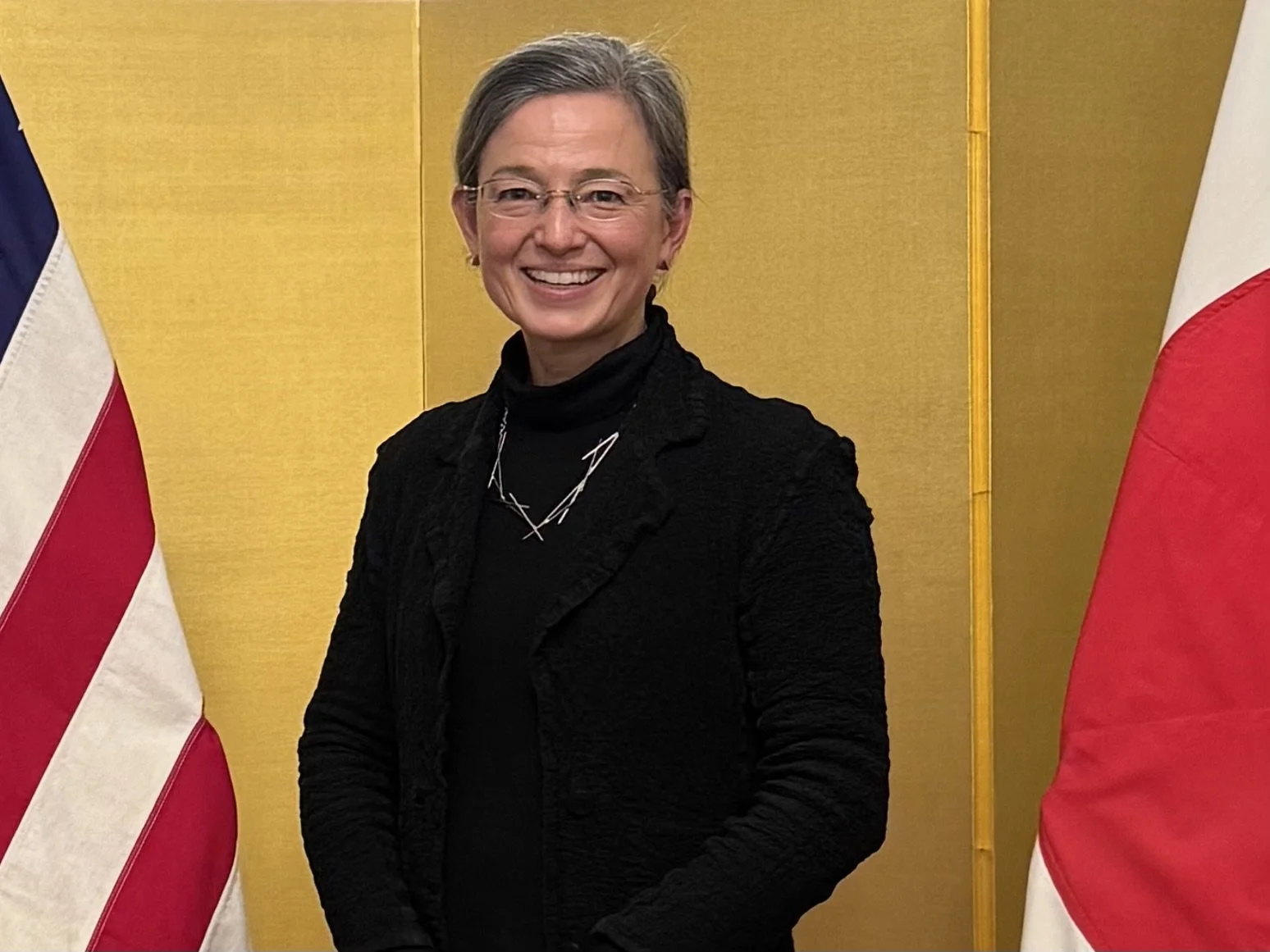
Managing Director, Japan, MIT International Science and Technology Initiatives, Massachusetts Institute of Technology (MIT)
“Homecoming.” — when asked if she could describe her experience with the International House of Japan in one word
Christine Pilcavage is a member of the International House of Japan and a Board Member and Secretary of the American Friends of the International House of Japan. Her journey in the world of Japanese affairs began long before she became a member in 2016. Christine was born and raised in Japan, and her mother is Japanese.
Christine is currently the Managing Director of the MIT-Japan Program at Massachusetts Institute of Technology. She collaborates with MIT students, faculty, and staff, sharing her culture and bringing a touch of Japan to the MIT community. She also helps build partnerships with Japanese companies, research institutes, universities, and startups, connecting MIT students with research opportunities and internships across Japan.
We had the wonderful opportunity to meet virtually with Christine to ask her questions about her experience as a member of the International House of Japan and as a leader in the American Friends of the International House of Japan.
Q: Looking back, is there a piece of advice that you have received that has been especially valuable in your professional and/or personal life?
A: Growing up, my mother always told me: “Make sure you say your greetings, your AISATSU.” The word Aisatsu is much more encompassing than a mere greeting. It’s hello and goodbye. I believe Aisatsu is culturally ingrained—it combines respect with “wa” or harmony—a greeting that anticipates gratitude and appreciation. This is the advice I take to heart and offer to others is to say your Aisatsu.
Q: What originally drew you to working in Japan-related international exchange, and what keeps you passionate about it today?
A: It is part of my DNA. I was born into it.
Q: When did you first get involved with the American Friends of the International House of Japan, and what inspired you to take on a leadership role within the organization?
A: I became involved in AFIHJ primarily because of David Janes. I’ve known David since 2000, and who doesn’t want to work with David! David asked me to join AFIHJ, and I said YES!
Q: How can IHJ better engage university students or rising professionals who want to form deeper ties with Japan?
A: IHJ can organize more events and conferences partnering with local universities to draw and engage students. To make these opportunities more accessible, IHJ should consider offering discounted rates for membership and accommodation to ease the financial burden that students face.
Q: What do you see as IHJ’s biggest strengths in fostering cross-cultural dialogue?
A: Being a neutral space where diverse views —especially on controversial topics—are welcome.
Q: What are a few discussion topics or projects you would like to see the International House of Japan engage more both in Japan and in North America? Are there any topics you are passionate or care about that you would like to see the International House engage in?
A: I enjoy cooking and would love to see programs that touch on food and cooking. For example, exploring ties between the history and influence of Japanese food in the U.S. as well as the reverse impact of American food in Japan cuisine. Another topic that I am interested in is the effect current U.S. tariffs have on food, culture, and health. What are the implications of these trade policies on the food that you buy or eat at markets and restaurants in Japan and the U.S.?
Q: What do you hope is the future of U.S.-Japan relations and the International House of Japan?
A: I hope I-House continues to be that bridge between Japan and other nations that brings people together, a welcoming and safe place where we can convene conversations on fun as well as difficult and controversial topics. I hope people will think of the I-House as a portal and primary resource for knowledge of Japan and for cultural exchange.
Q: What has interested you the most, or made you the most excited, about the work AFIHJ does?
A: Having more cross-pollination across the different organizations. For example, I’ve enjoyed attending the joint collaborations with Japan-America societies in North America and Asia Society. Through partnerships and better programming, we are able to find ways to strengthen ourselves and have dialogues that can reach larger audiences. When you do things alone, you have limited resources and might miss perspectives, but with partnership and diversity, you can magnify impact.