
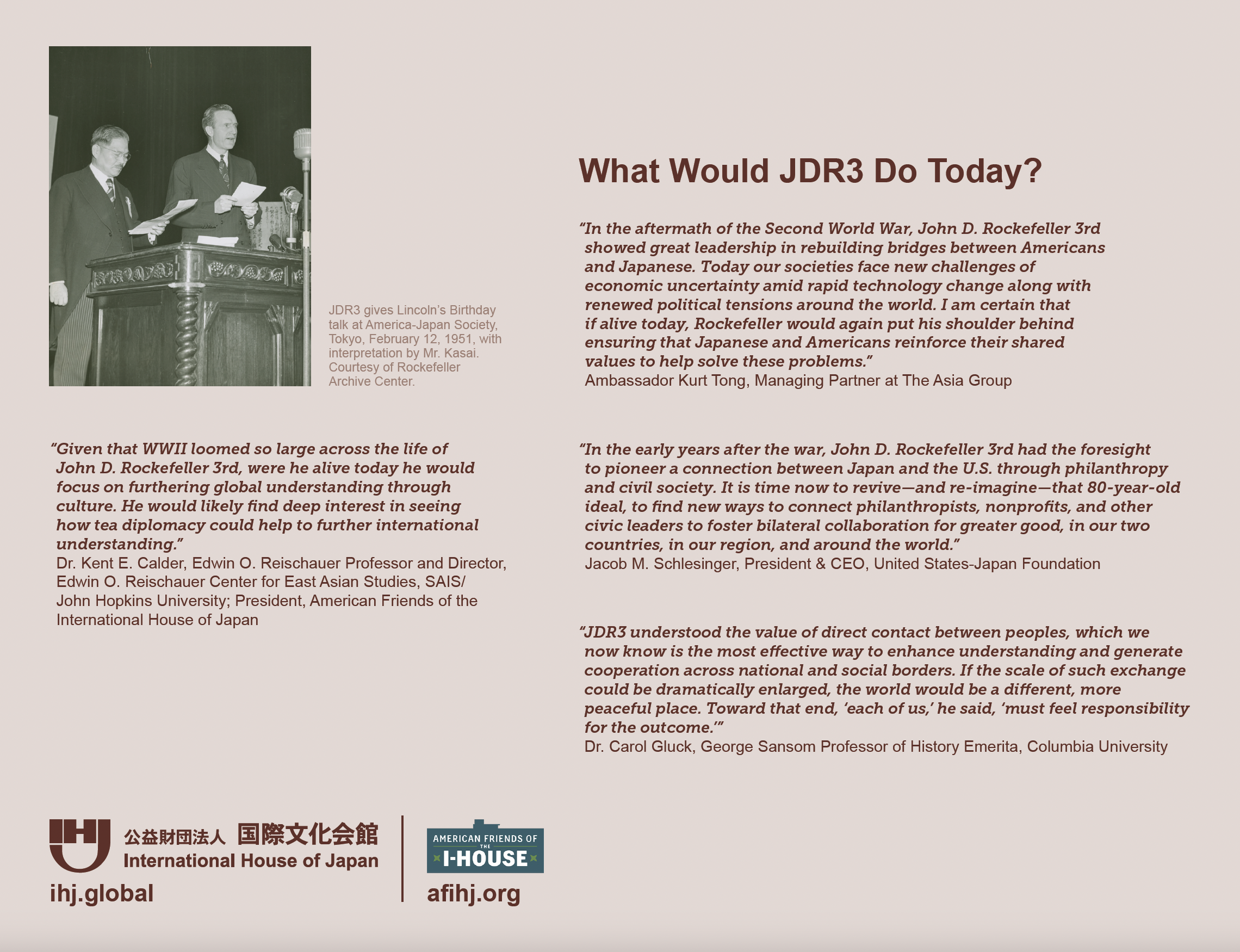
John D. Rockefeller 3rd co-founded the International House of Japan with Shigeharu Matsumoto. He also revived the Japan Society post-World War II, founded the Asia Society, co-founded the India International Center, helped create the Ramon Magsaysay Award Foundation, and played a key role in what became the Asian Cultural Council. This legacy of Asia-related philanthropy and institution-building offers lessons for the future. Today, the International House of Japan, in partnership with the American Friends of the International House of Japan, is engaging in research at the Rockefeller Archive Center to not only learn from the past, but also to develop strategic tools for the future and foster a platform to reignite the collaborative ethos that JDR3 envisioned for the Asia-related organizations he created or guided. An initial vision statement is available here and highlighted below.
John D. Rockefeller 3rd and japan: A vision for the future
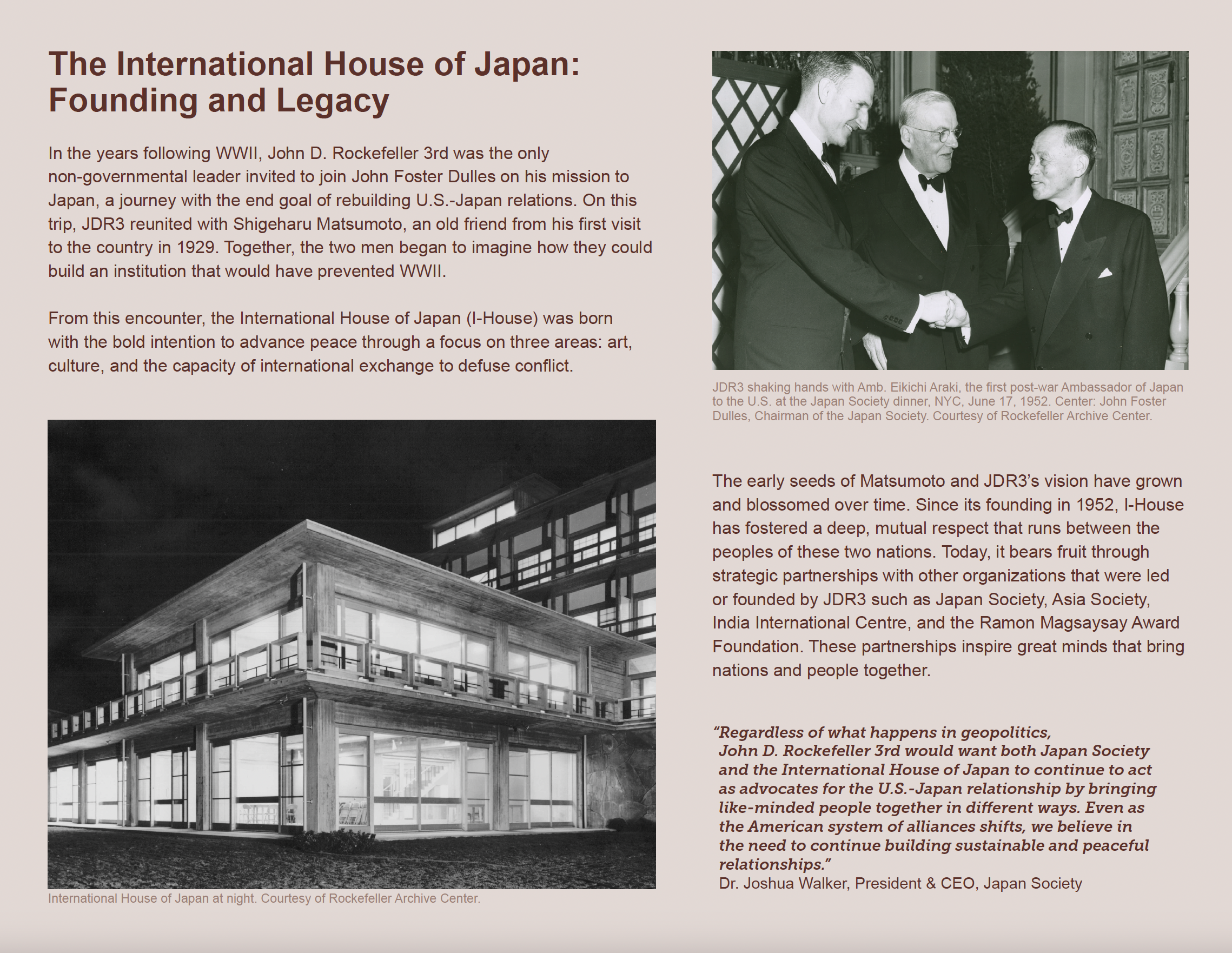
In the years following WWII, John D. Rockefeller 3rd was the only nongovernmental leader invited to join John Foster Dulles on his mission to Japan, a journey with the end goal of rebuilding U.S.-Japan relations. On this trip, JDR3 reunited with Shigeharu Matsumoto, an old friend from his first visit to the country in 1929. Together, the two men began to imagine how they could build an institution that would have prevented WWII.
From this encounter, the International House of Japan (I-House) was born with the bold intention to advance peace through a focus on three areas: art, culture, and the capacity of international exchange to defuse conflict.
The early seeds of Matsumoto and JDR3’s vision have grown and blossomed over time. Since its founding in 1952, I-House has fostered a deep, mutual respect that runs between the peoples of these two nations. Today, it bears fruit through strategic partnerships with other organizations that were led or founded by JDR3, such as Japan Society, Asia Society, India International Centre, and the Ramon Magsaysay Award Foundation. These partnerships inspire great minds that bring nations and people together.
-
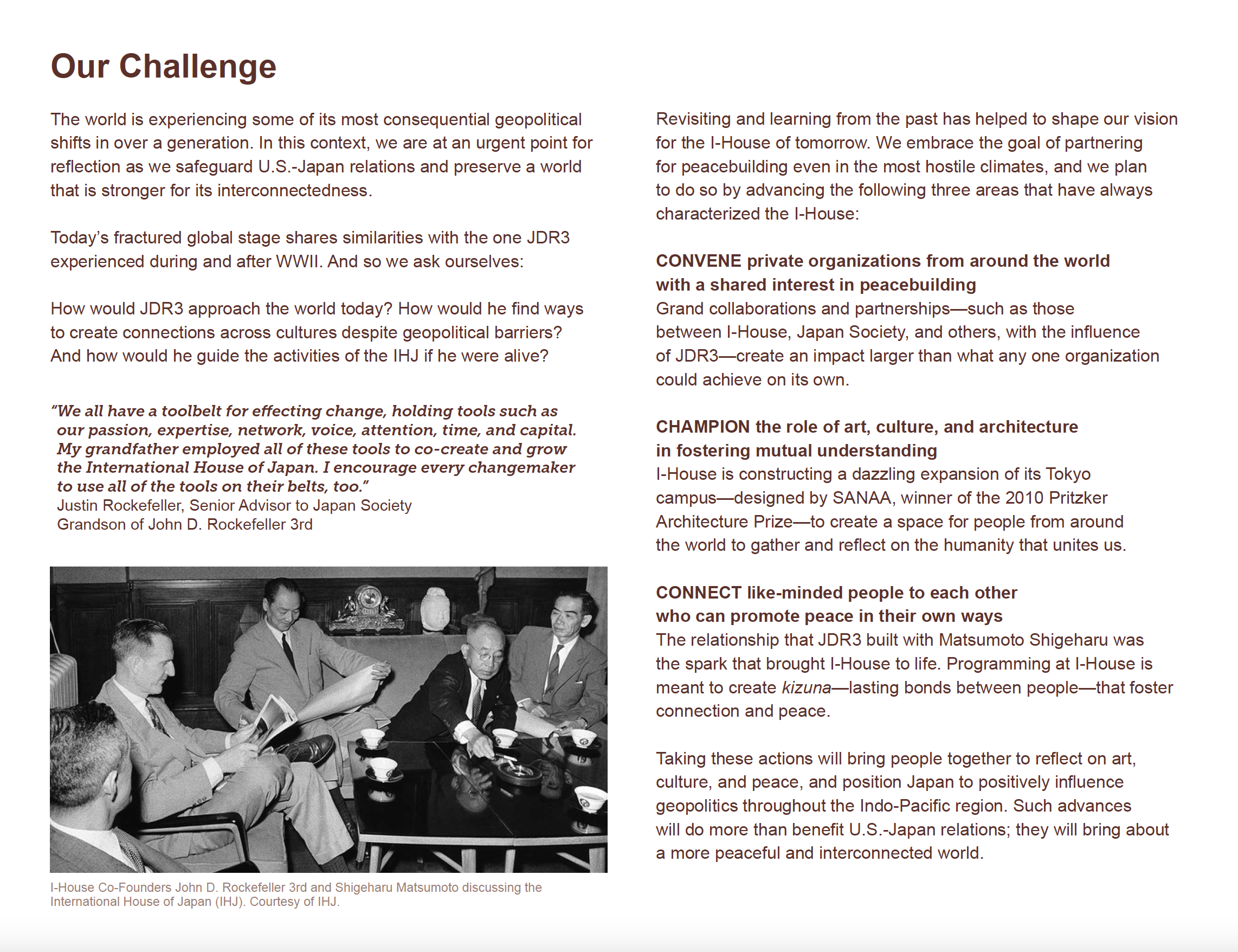
The world is experiencing some of its most consequential geopolitical shifts in over a generation. In this context, we are at an urgent point for reflection as we safeguard U.S.-Japan relations and preserve a world that is stronger for its interconnectedness.
Today’s fractured global stage shares similarities with the one JDR3 experienced during and after WWII. And so we ask ourselves:
How would JDR3 approach the world today? How would he find ways to create connections across cultures despite geopolitical barriers? And how would he guide the activities of the IHJ if he were alive?
Revisiting and learning from the past has helped to shape our vision for the I-House of tomorrow. We embrace the goal of partnering for peacebuilding even in the most hostile climates, and we plan to do so by advancing the following three areas that have always characterized the I-House:
CONVENE private organizations from around the world with a shared interest in peacebuilding
Grand collaborations and partnerships—such as those between I-House, Japan Society, and others, with the influence of JDR3—create an impact larger than what any one organization could achieve on its own.
CHAMPION the role of art, culture, and architecture in fostering mutual understanding
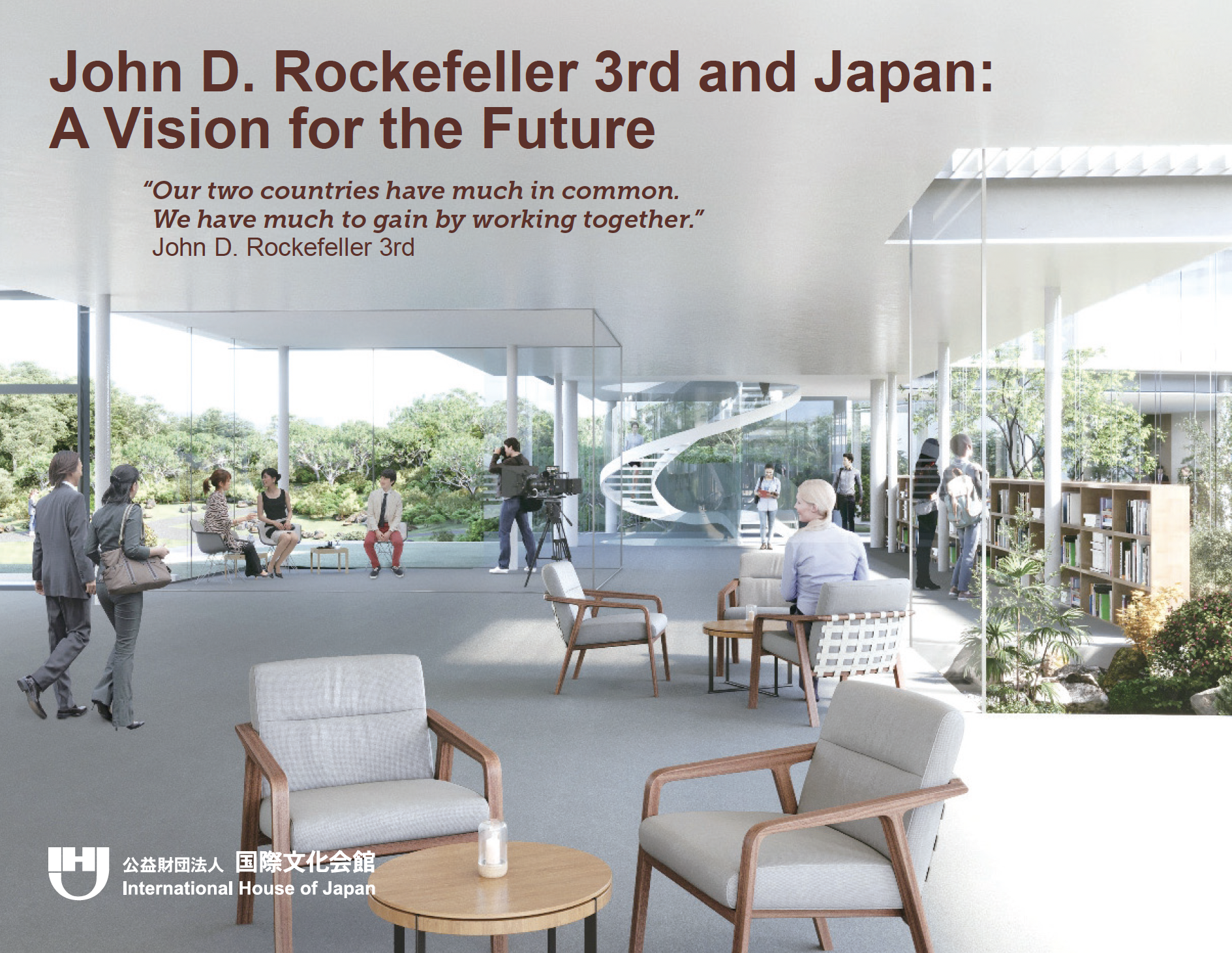
I-House is constructing a dazzling expansion of its Tokyo campus—designed by SANAA, winner of the 2010 Pritzker Architecture Prize—to create a space for people from around the world to gather and reflect on the humanity that unites us.
CONNECT like-minded people to each other who can promote peace in their own ways
The relationship that JDR3 built with Matsumoto Shigeharu was the spark that brought I-House to life. Programming at I-House is meant to create kizuna—lasting bonds between people—that foster connection and peace.
Taking these actions will bring people together to reflect on art, culture, and peace, and position Japan to positively influence geopolitics throughout the Indo-Pacific region. Such advances will do more than benefit U.S.-Japan relations; they will bring about a more peaceful and interconnected world.
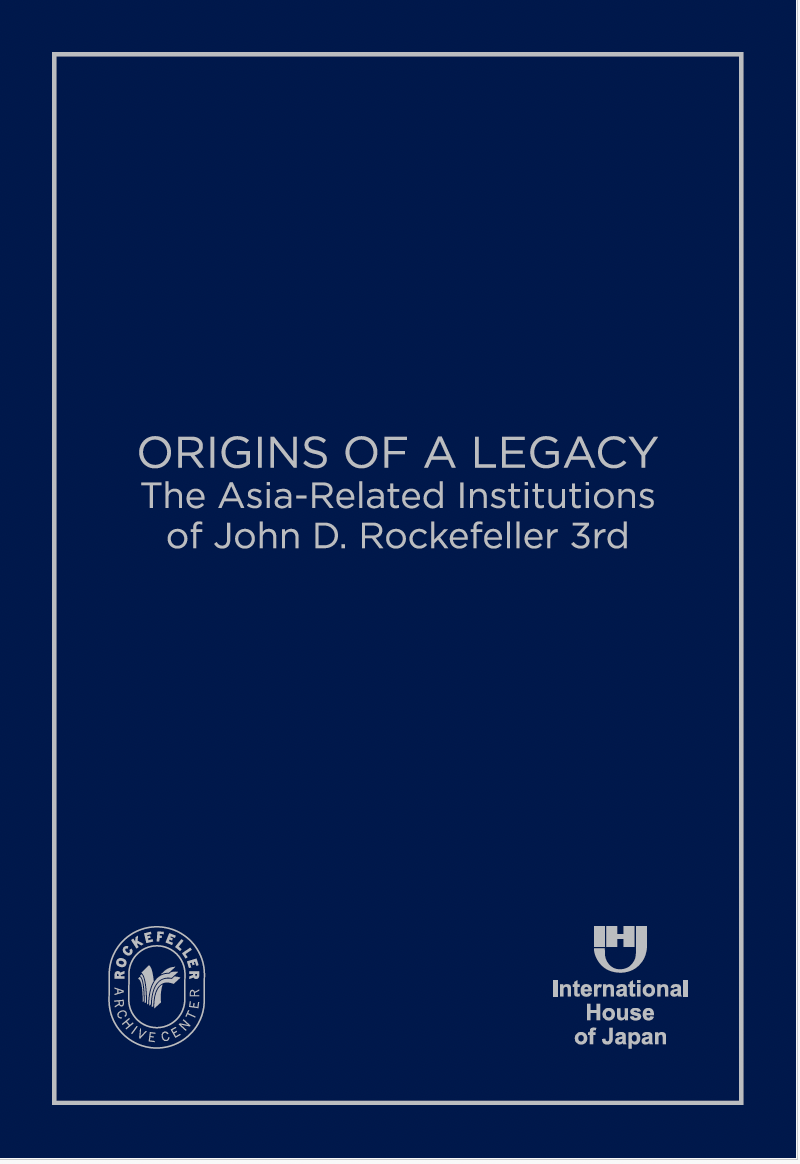
Publication Now Available
Co-published by the International House of Japan, AFIHJ, and the Rockefeller Archive Center, this new publication offers a rare and deeply researched examination of John D. Rockefeller 3rd’s vision, his extraordinary institution-building across Asia, and the enduring relevance of these efforts in today’s rapidly shifting global landscape. More than a retrospective, it serves as a call to reimagine how these institutions, and those who steward them, can work in concert to address the defining challenges of our time.